Non-standard tube forming: a decade of challenging convention
Ten years after taking ownership of Timeless Tube, Managing Director Tom McMillan reflects on some of the projects that have pushed the boundaries of what was thought possible — and why challenging assumptions can be key to that process.
By Tom McMillan, Managing Director, Timeless Tube
When I acquired Timeless Tube, the business already had more than 25 years of specialist tube-forming expertise behind it. Over the past decade we've built on that — new profiles, expanded fabrication capability, and applications we could never have anticipated.
What interests me most are the enquiries that begin with someone asking for something they can't readily buy — or something we're not entirely sure we can make. Some of our most interesting work has come from testing an idea that looked difficult or unlikely, and finding that a perceived limit wasn't a limit at all.
"We haven't done it before" doesn't mean it can't be done
Engineering experience is valuable, but it can also give you preconceived ideas about what will and won't work. I've learnt to challenge my own expectations.
With some enquiries my first reaction is I'm not sure we can do that. Sometimes we try it and discover we were right — materials don't always behave nicely, and tubes have been known to spring, buckle and bow when we push them to their limits. But sometimes we're pleasantly surprised.
One example is US lighting and furniture designer Unform Studio and their sculptural light commission, which was made using one of our largest flat-sided oval tubes. The tube needed a significantly-sized section cut from its faces to accommodate LED lighting. Stainless steel has an innate springiness, so we couldn’t be sure how the tube would behave with such large sections laser-cut from its faces.
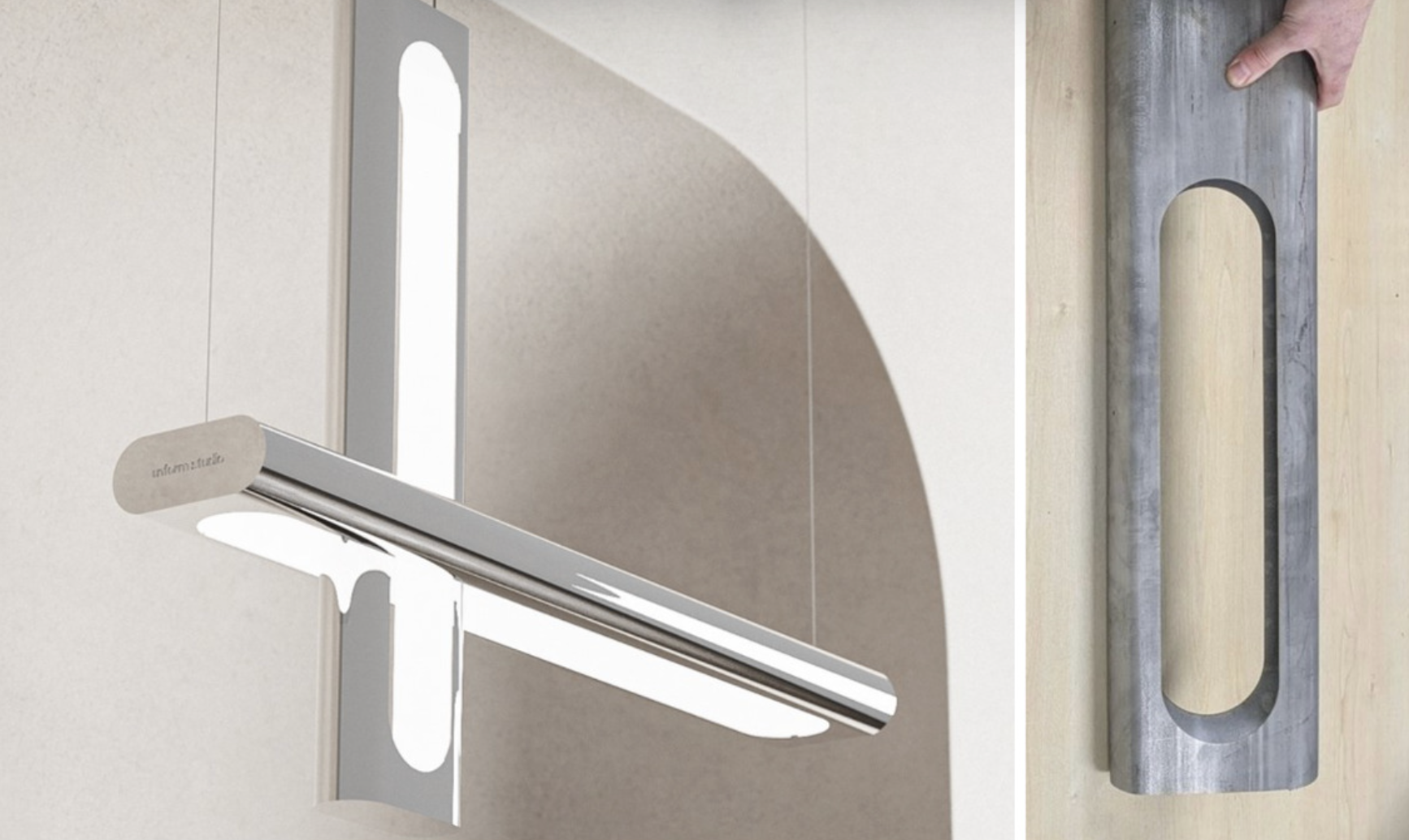
But the tube held up well, and the resulting component became part of a striking finished piece. Our experiment demonstrated that we can successfully laser-cut sections from the face of other formed tubes, allowing for the integration of apertures, fixings or hardware.
That's what I enjoy about unusual enquiries: they don't just test what you can make for one customer. Sometimes they expand what you can make for the next one.
Design guidelines aren't necessarily manufacturing limits
There are good reasons for design guidelines. For elliptical and flat-sided oval tubes, we generally recommend a major-to-minor axis ratio around 2:1. As tube profiles become wider and flatter, the tube may distort, wrinkle or even collapse. But there is no single figure that defines its limit. We have successfully made tubes with a ratio that exceeds 5:1.
Starting diameter, wall thickness, material grade and weld seam all play a part. Our guidelines are a sensible starting point, not a hard boundary. When a customer requests a profile outside our usual proportions, we assess the material and application and, where appropriate, run trials. Sometimes we can push the geometry further than expected.
The finished profile is only as good as the round tube we start with
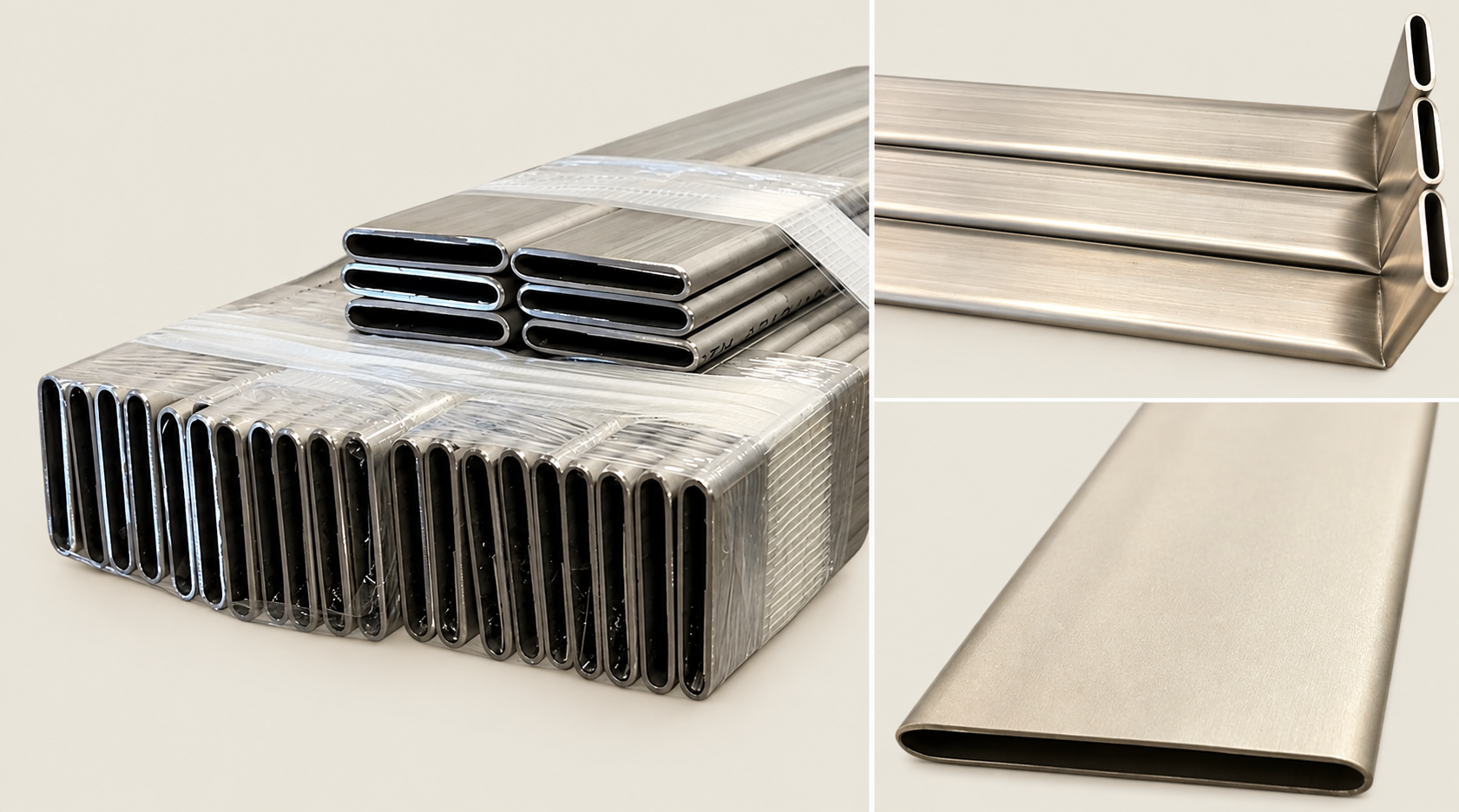
We make our tubes from off-the-shelf round tubes using a cold-forming process. But the quality and consistency of this originating material matters enormously —wall thickness, dimensional consistency, material condition and, particularly with welded tube, the quality and position of the weld seam, all affect how predictably tube forms.
We can accept free-issued round tubes when a customer or supplier already has access to a particular grade or source, but we always need to check that it is suitable for forming.
Understand the application, not just the drawing
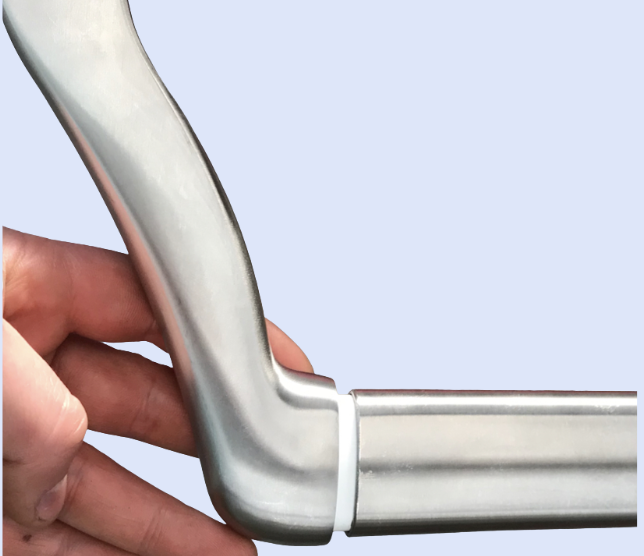
Knowing how the tube is going to be used can be as important to us as knowing the dimensions. Not every dimension carries equal importance. The major axis might need to be held closely, but there could be more flexibility on the minor axis; knowing that upfront lets us adjust tooling and process to meet the dimension that actually matters. And if our tube needs to locate inside another component, overall width and height don't tell the whole story — corner radii and mating geometry decide whether two 'compatible' parts go together.
When customers send us the mating component it allows us to adjust the tube during manufacture to ensure a good fit. We have done this with emergency exit push bar handle fittings, and legacy aerospace parts.
Tighter tolerances aren't automatically better
I've also learnt to question tolerances rather than simply accepting every figure on a drawing. Occasionally we're asked to hold tolerances far tighter than the application needs — sometimes inherited from CAD defaults or a standard template rather than a deliberate decision.
Precision has a cost. Adhering to an unnecessarily tight tolerance adds machining, fabrication, inspection and production time without making the part perform any better. A conversation with the customer's engineering team can establish which dimensions are genuinely critical. The goal isn't to manufacture to the tightest tolerance theoretically achievable — it's to manufacture accurately enough for the part's intended purpose.
Shaped tubing is not all about the looks
When I first bought the business, our profiles were often referred to as 'ornamental tube' or 'decorative tube.' Aesthetics is a fundamental reason people choose our tubing — but those terms undersell what the tubes can do. Our profiles are also chosen for high-performance heat transfer, food production machinery, automotive systems… a diverse range of technical and mechanical applications. Flat-sided oval tube is an especially space-efficient form for engineers and product designers, not just a design flourish.
Non-circular tubes can cost less to manufacture than circular tubes
Our tube will always be more expensive than off-the-shelf round tube because of the extra forming process. But several client projects have shown how a shaped profile can pay that back in the long-run when fabrication is factored in.
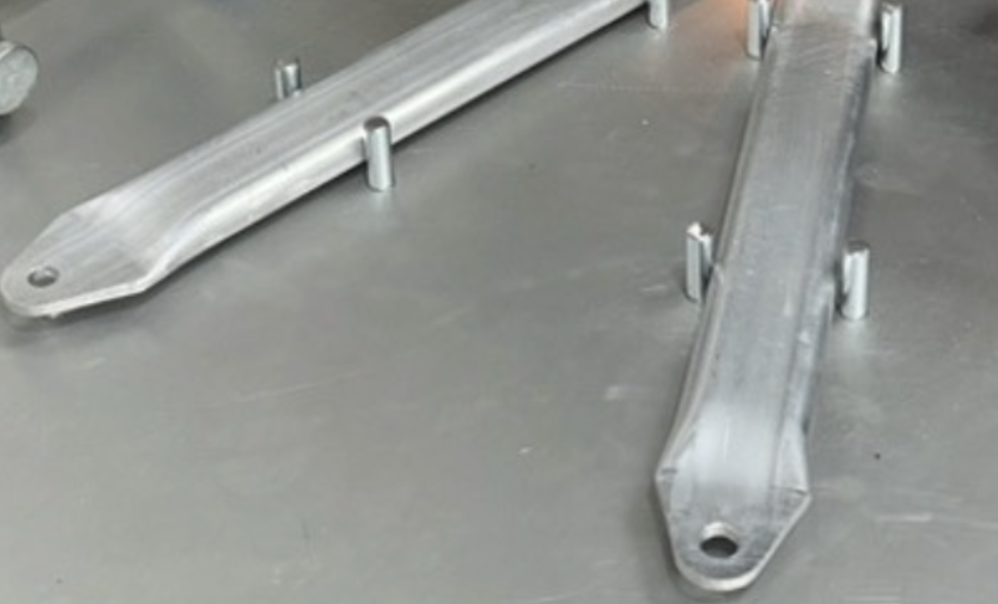
On one assembly made from a very flat oval tube, we pressed the tube ends together and machined a screw hole directly through both tubes, removing the need for any additional fixings. Flat-sided oval tube also has impressive deflection strength when oriented on its minor axis — allowing longer unsupported spans on railings, with fewer fixings and supports needed.
We can now form a much larger flat-sided oval tube made from 8" OD tube, which has a spacious hollow section to house electronics and other components. Its faces can comfortably accommodate a touch pad or control unit. This large stainless steel FSO tube offers manufacturers a space-efficient form that requires fewer fixings.
The cost of the tube is only one line in the total cost of a part. Fewer fixings, fewer supports and less assembly time can outweigh the initial outlay.
There's a gap between what can be made and what people know can be made
There's still a considerable gap between what's technically and commercially possible with tube, and what the market assumes is available. We regularly meet designers, engineers and buyers who assume that if a profile isn't stocked, producing it means a bespoke mill run and a very large order. It doesn't. At Timeless Tube we start with commercially available round tube and cold-form it into a non-circular profile — orders can range from a single length to thousands, so a customer can prototype and trial a new geometry without committing to production volumes.
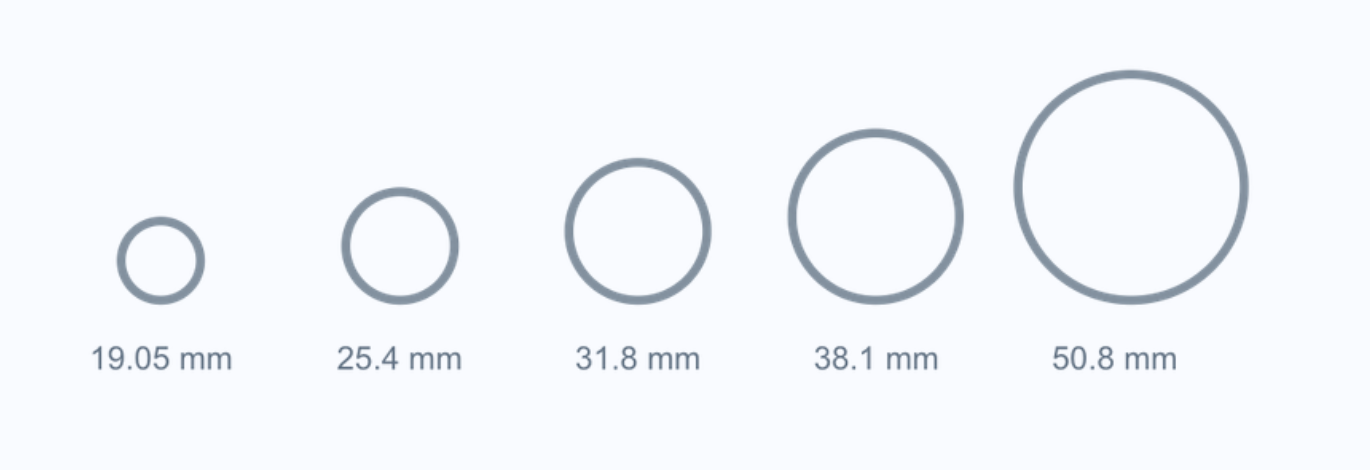
What's particularly striking is how much variety comes from a small range of standard material. When we recently analysed our production data, 72% of the tubes we produced originated from just five round outside diameters: 19.05mm, 25.4mm, 31.8mm, 38.1mm and 50.8mm. Those five starting sizes have become flat-sided oval, elliptical oval, radiused square, D-shaped and other profiles, used across entirely different industries.
For the metals trade, that's an opportunity. The stockholder may already be supplying exactly the round tube we need as feedstock. We may already have tooling to turn it into the profile their customer wants — or a near-size that does the same job. And where we don't, we can assess whether developing a new profile is viable. A merchant doesn't need to stock hundreds of specialist profiles to give customers access to them; they need a connection between the material already moving through the supply chain and the manufacturing capability to shape it.
After ten years, what surprises me is how many potential customers still don't know that we can form in this way. Which means there are enquiries being turned away across the metals trade right now that could become business for all of us.
Accessible design and user-centric thinking
I readily acknowledge that our innovation at Timeless Tube is down to clients who ask questions rather than accepting the default circular tube.
I think that accessible design is one area where that questioning matters most, and where I'd like to see more of it over the next decade.
One of the best examples we've been involved with is a project by GKV Architects, who specified our oval handrail at a Government Children's Centre in New York. The handrails were installed at two different heights, sized differently for children and adults. Circular tube handrail, very much the default handrail in public spaces, is not as easy to grasp as an oval profile. But GKV didn't just vary from the default; they built the design around two very different sets of hands using the same staircase.
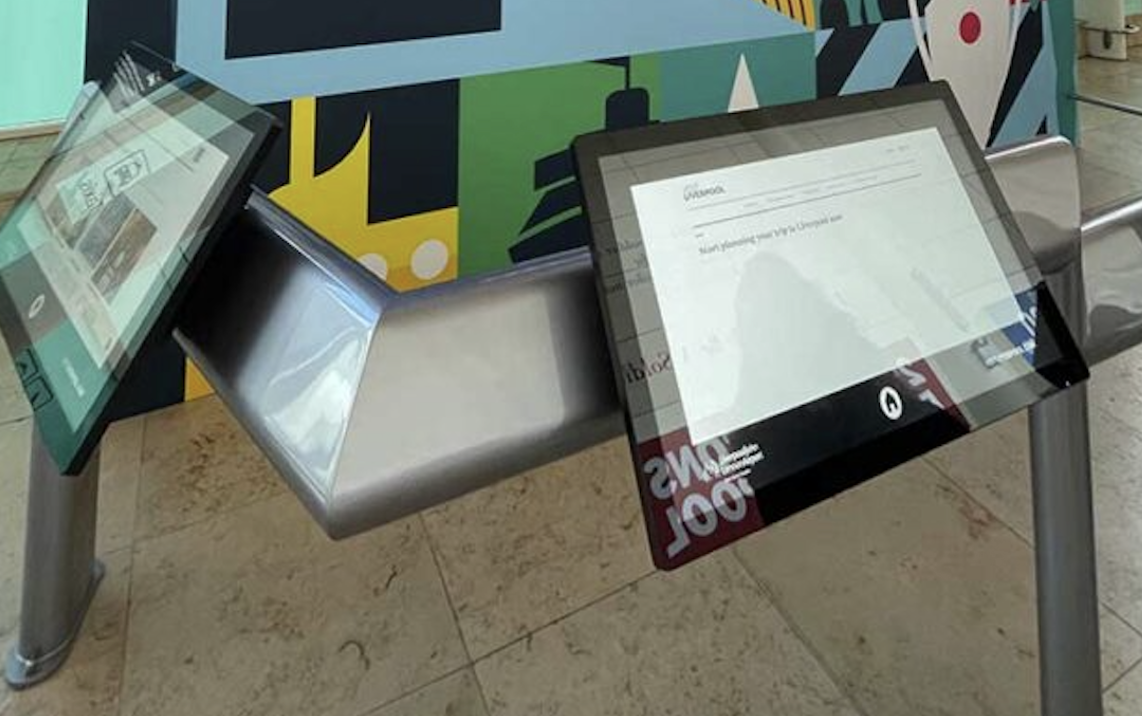
We've seen the same instinct closer to home with a flat-sided oval frame for an accessible interactive kiosk at John Lennon Airport in Liverpool, which was angled to provide improved access for wheelchair users. The flat-faced profile, not only easier to mount to than round tube, was also chosen because it did not protrude into the surrounding space in the way a circular section would, making it a more friendly design for wheelchair users. Flat-sided oval tube was specified because someone thought about how the object would be used, then worked backwards from there.
I'd like to see more of this user-centric thinking applied to urban architecture such as bollards, posts and street furniture. Tubes used in these applications are so often circular by habit rather than by design. A user-centric design approach prioritises people and their needs, and often involves testing ideas with the users so the solutions truly fit their everyday lives. Our process works well for this kind of prototyping, because our flexible manufacturing process allows us to make iterations with relative ease.
Ten years in, that's the pattern I want to keep encouraging: clients who bring us a problem and ask us to work out whether there's a better shape for the job. It's how many of the best projects begin."
Tom McMillan, Managing Director, Timeless Tube
More stories
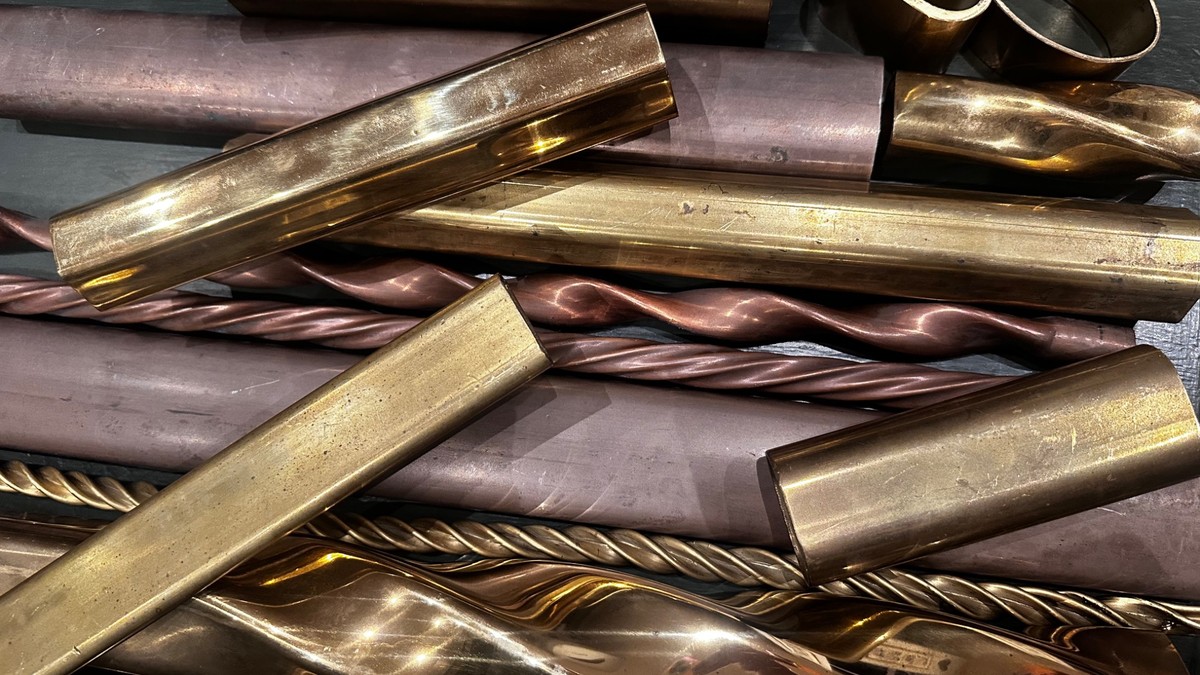
Warm tones, new shapes: rethinking architectural tubing
Bespoke architectural tubes with a warm, earthy aesthetic: brass, bronze and copper-alloy tubing for handrails, balustrades and decorative metalwork, plus coated stainless steel tubing.
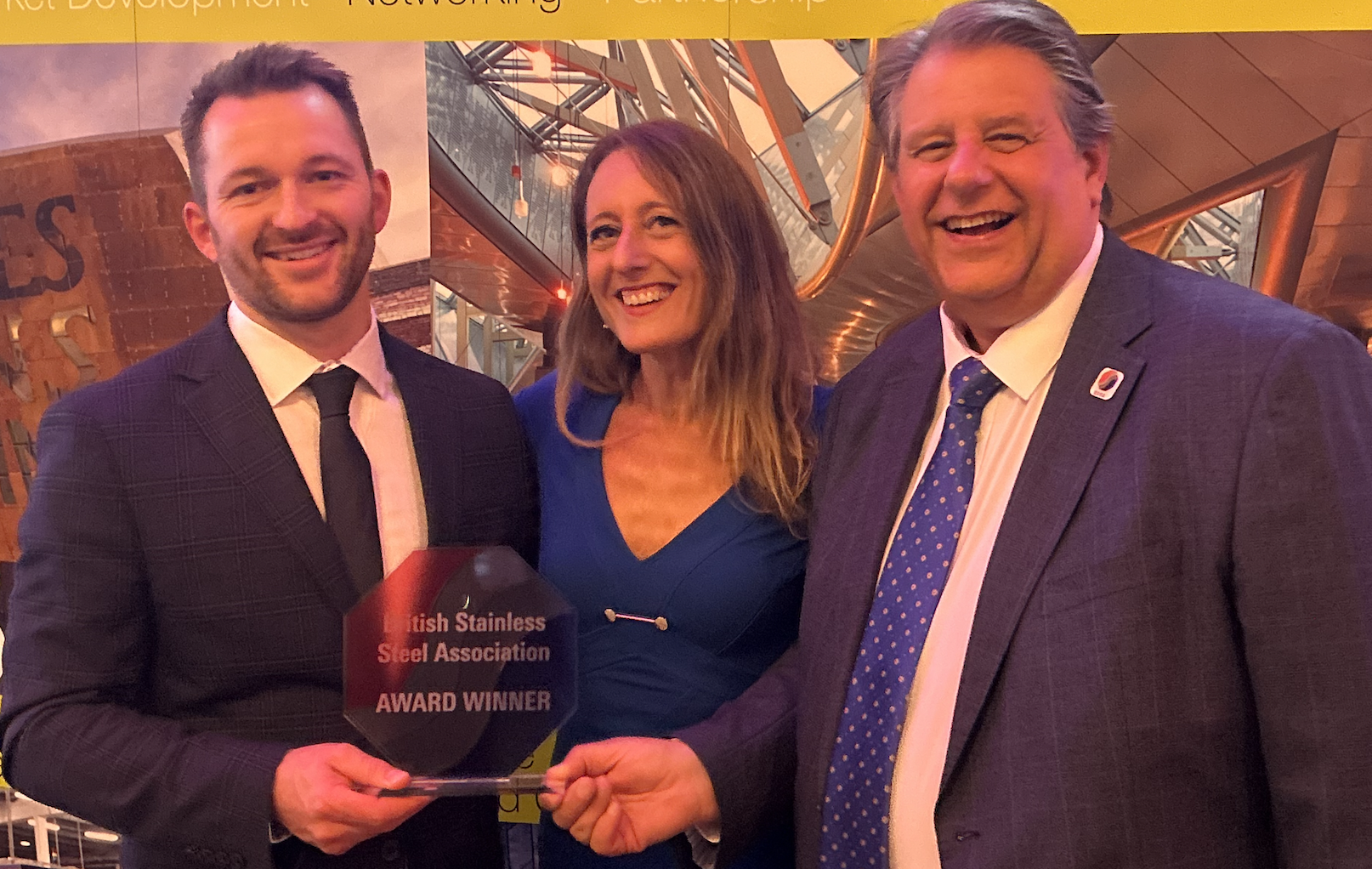
Timeless Tube Wins Industry Award for Innovation in Stainless Steel
Timeless Tube receives Innovation Award from British Stainless Steel Association in recognition of our commitment to making custom tube profiles accessible to innovative OEMs, designers and specifiers
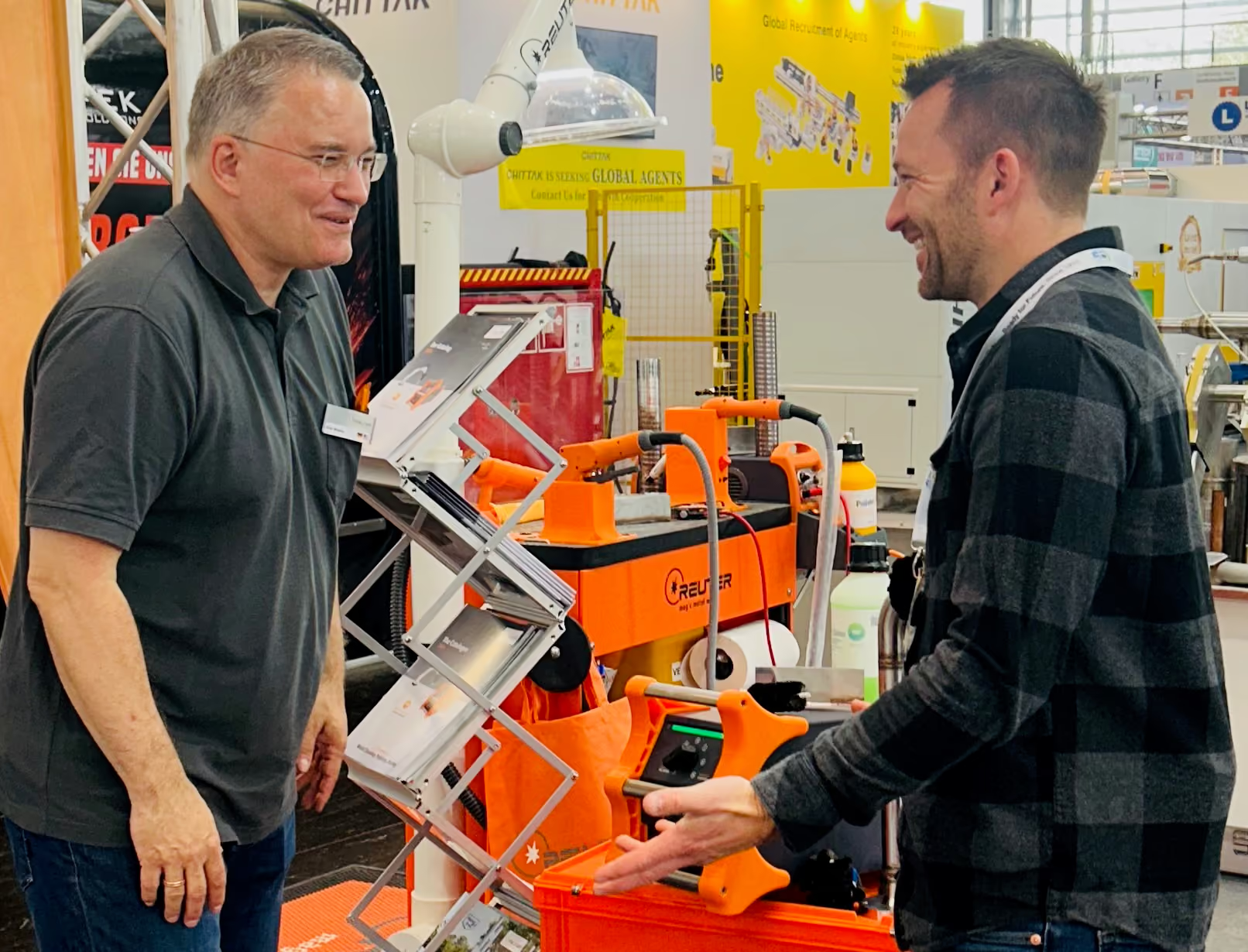
'Powerhouse' German weld cleaning product uses oval tube for strength, ergonomics, safety and aesthetics
Oval tube handles and guarding used for premium weld clean product, specified for their strength, space-efficiency, style and safety.
