Custom Tube Profiles and New Tube Sizes
Bespoke oval, flat-sided oval and non-circular tube profiles cold-formed to your specification — from initial prototype through to ongoing OEM production
How we develop bespoke tube profiles
We use a cold-forming process to produce non-circular tube profiles from standard circular tubing. This highly flexible manufacturing method enables us to develop new tube sizes and custom geometries quickly, whether for a prototype, a short production run or a long-term OEM programme.
Because the process does not depend on the large minimum order quantities typically associated with extrusions or dedicated roll-forming lines, new profiles can be developed with low commercial risk. The same process scales directly into repeat production, giving a straightforward route from concept to volume manufacture.
When is new tooling required?
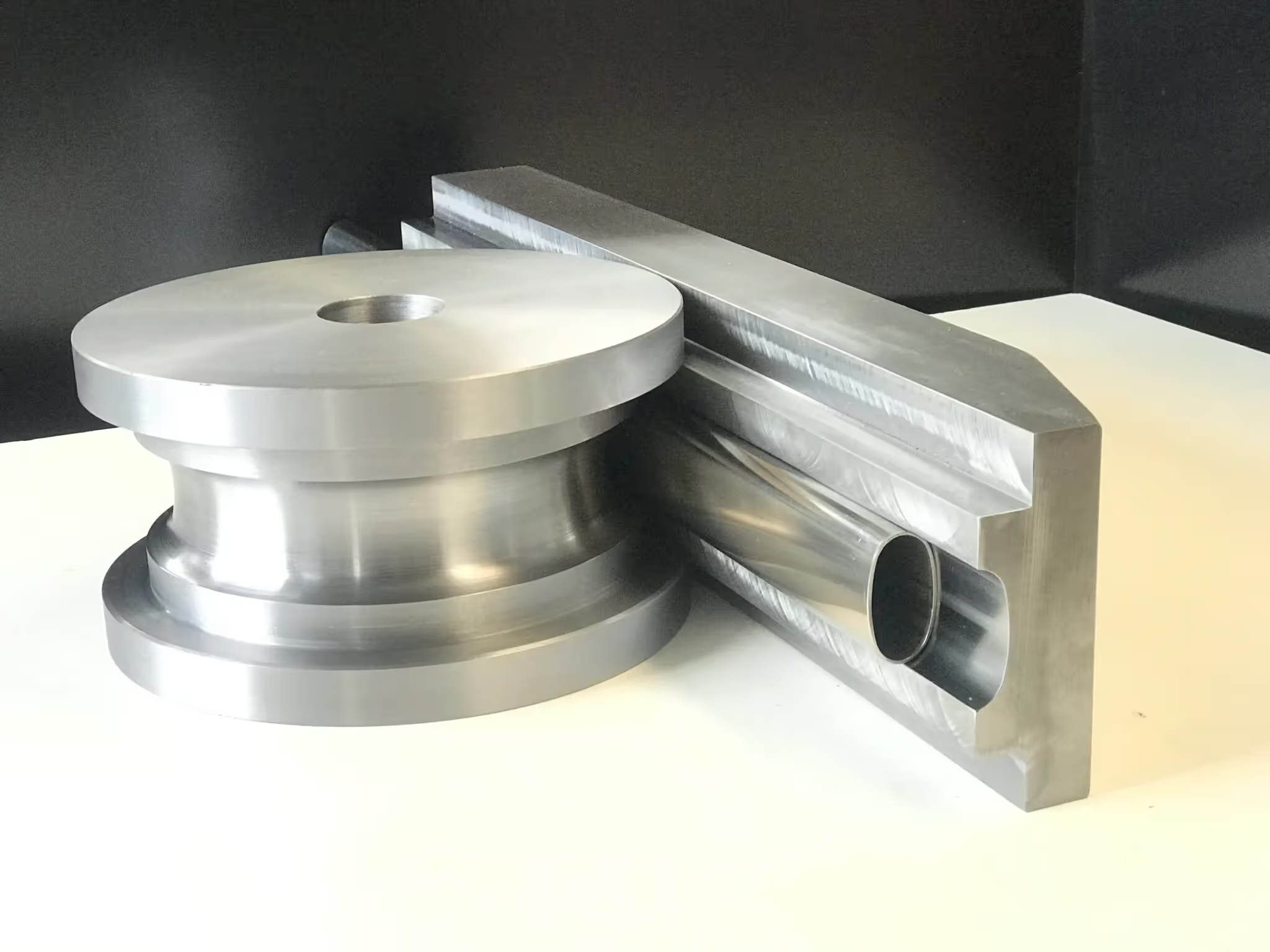
We can achieve many bespoke dimensions by recalibrating the spacing between the tooling rollers that we use to form the profiles.
But new tooling may be needed when a requested profile falls outside our established size range, it exceeds proven forming ratios, it requires unique radii or has dimensional requirements that existing tooling cannot achieve.
The most common profiles we develop are elliptical oval and flat-sided oval (FSO) tubes.
The feasibility of a new profile depends on several factors, including the starting tube diameter, wall thickness, required dimensions and the ratio between the major and minor axes.
We always evaluate our existing tooling options to see if they can be modified before recommending a new tool. This keeps development costs and timescales as low as possible.
What is the ratio and how is it calculated?
The ratio describes the relationship between the major and minor dimensions of the profile. It is calculated by dividing the major axis by the minor axis.
Example: 60 × 30 mm = 2:1 ratio
Compared with oval (elliptical tubes), FSO tubes can achieve higher aspect ratios, enabling flatter cross-sections with greater width-to-height differences if required.
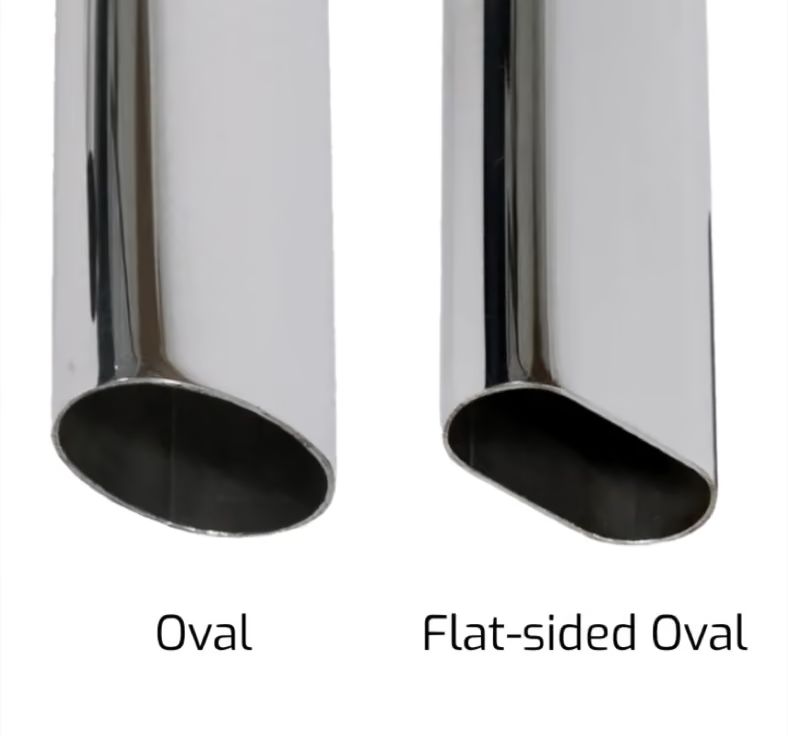
Oval (elliptical) tubes: achievable ratios and sizing range for new oval tubes
Oval tube is a smooth, continuous elliptical profile with no flat sections. The curve runs uninterrupted around the entire perimeter of the tube.
We currently own tooling that enables us to manufacture oval (elliptical) tubes from 23.5mm to 250mm on the major axis.
Achievable dimensions depend on the raw material, wall thickness and required profile ratio.
For most applications, we recommend keeping elliptical oval profiles below a 2:1 ratio. Beyond this point, appearance, tooling constraints and forming behaviour may require additional consideration. As the ratio between the major and minor dimensions increases, elliptical profiles can become increasingly elongated, causing the end radii to tighten and the profile to appear pointed or eye-shaped.
We have successfully manufactured elliptical profiles at ratios up to 2:1, although most standard production sizes fall below this. If your design exceeds this guideline, please contact us to discuss feasibility.
Examples of Elliptical Oval Tube Ratios
Flat-Sided Oval (FSO) tubes: achievable ratios and sizing range for new FSO tubes
Flat-sided oval tube incorporates parallel flat faces joined by radiused ends. Flat-sided oval profiles are frequently specified as an alternative to circular tube, rectangular box section or solid bar.
We currently own tooling that enables us to manufacture flat-sided oval tubes from 10.5mm up to 250mm on the major axis.
Many custom sizes can be produced within this range, reducing development costs and shortening lead times (compared with commissioning an entirely new forming tool).
Achievable dimensions depend on the raw material, wall thickness and required profile ratio.
Flat-sided oval profiles can comfortably exceed the ratio of conventional elliptical profiles, enabling us to form ultra-flat tubes.
Examples of FSO Tube Ratios
Tube Tolerances and Dimensional Accuracy
New profile development is not simply a tooling exercise. Material behaviour, wall thickness, forming ratio and springback all influence the final dimensions achieved during production.
For this reason, wider tolerances apply during the first production run of a new size while the forming process is validated and repeatability is established.
Once the profile has been proven and approved, repeat production is manufactured to our standard production tolerances.
Small dimensional changes can significantly influence appearance, stiffness, bendability, fixing methods and compatibility with standard components. Early discussion with our engineering team can often improve manufacturability and reduce development costs.
Standard tolerances apply to repeat production once a profile has been trialled, validated and approved.
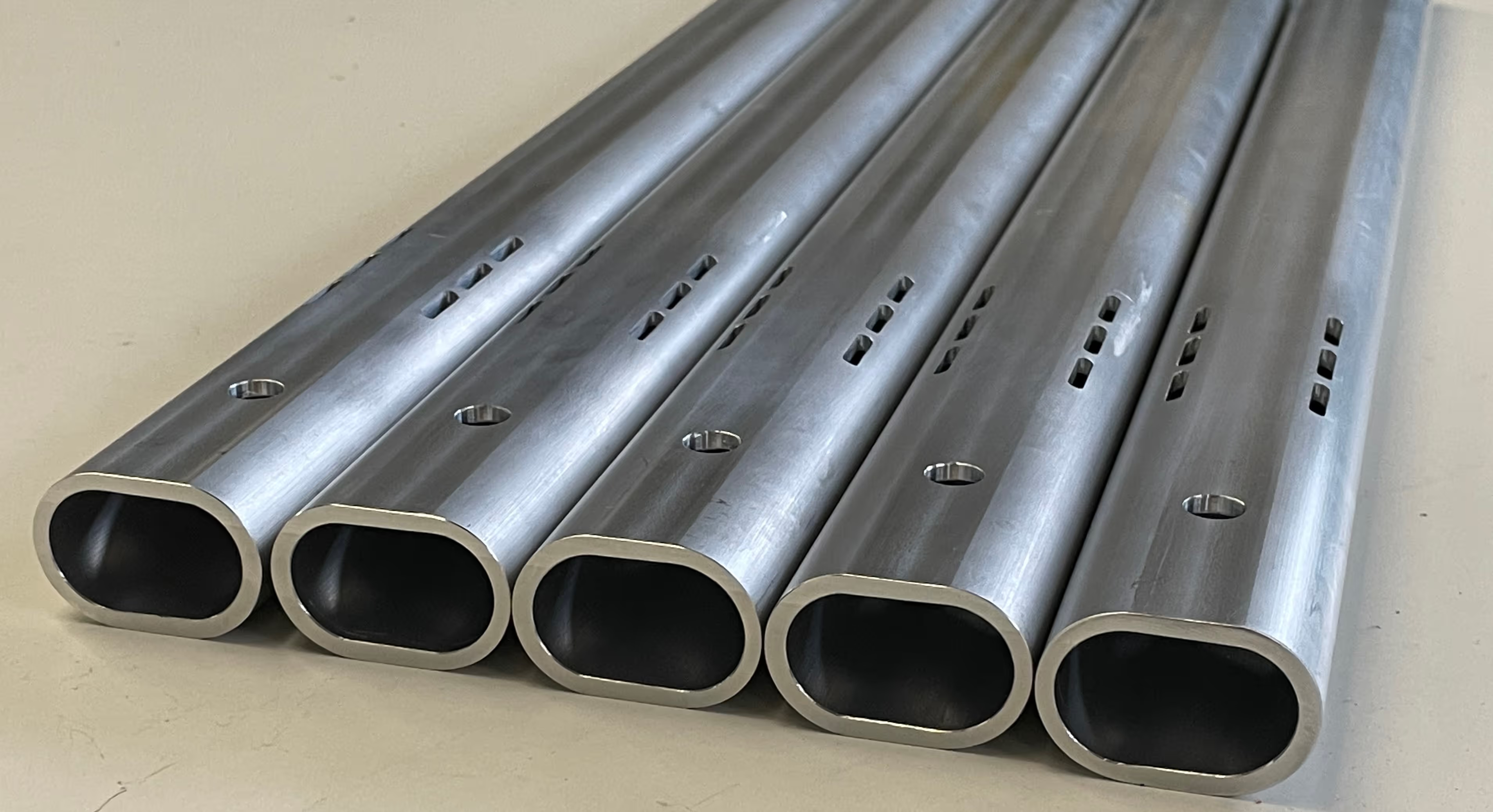
Forming New Tube Profiles
Clients approach Timeless Tube when standard circular, square or rectangular sections cannot deliver the required performance, appearance or integration.
Our flexible cold-forming process enables us to experiment with new forms. Sometimes we can modify existing profiles, or sometimes we need to get new tools made to use in our machinery.
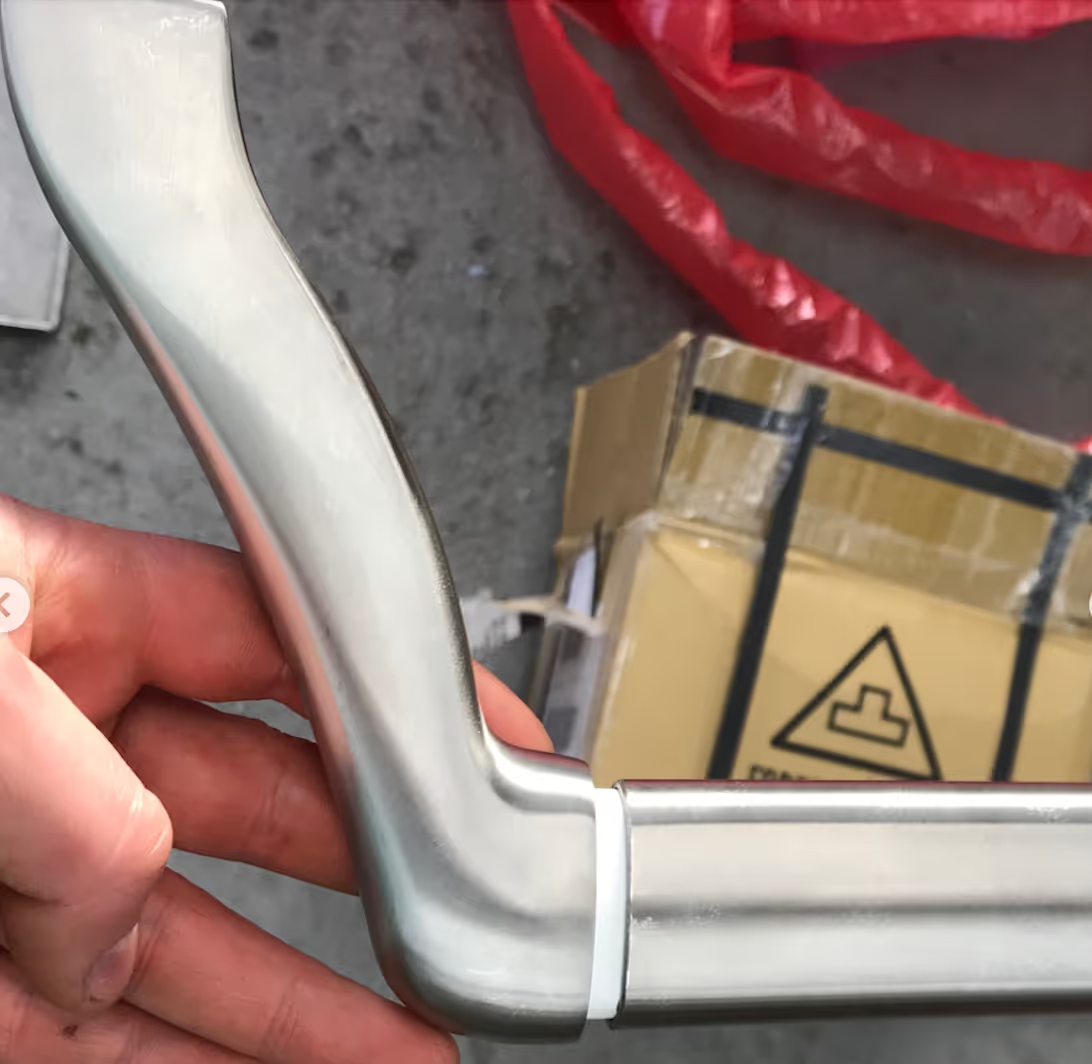
Find out more about some of our other custom tube profiles, including our flat-sided teardrop tube and our loaf-style handrail.
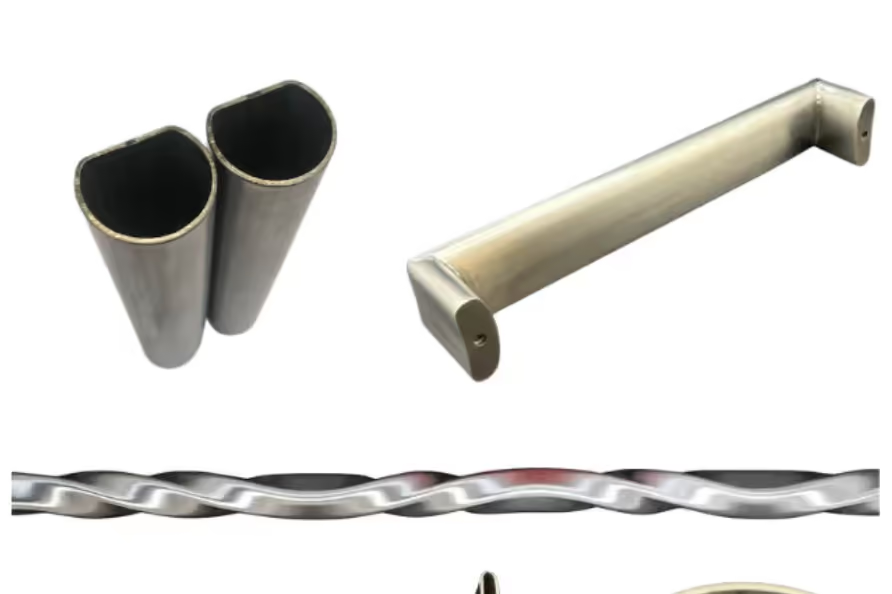
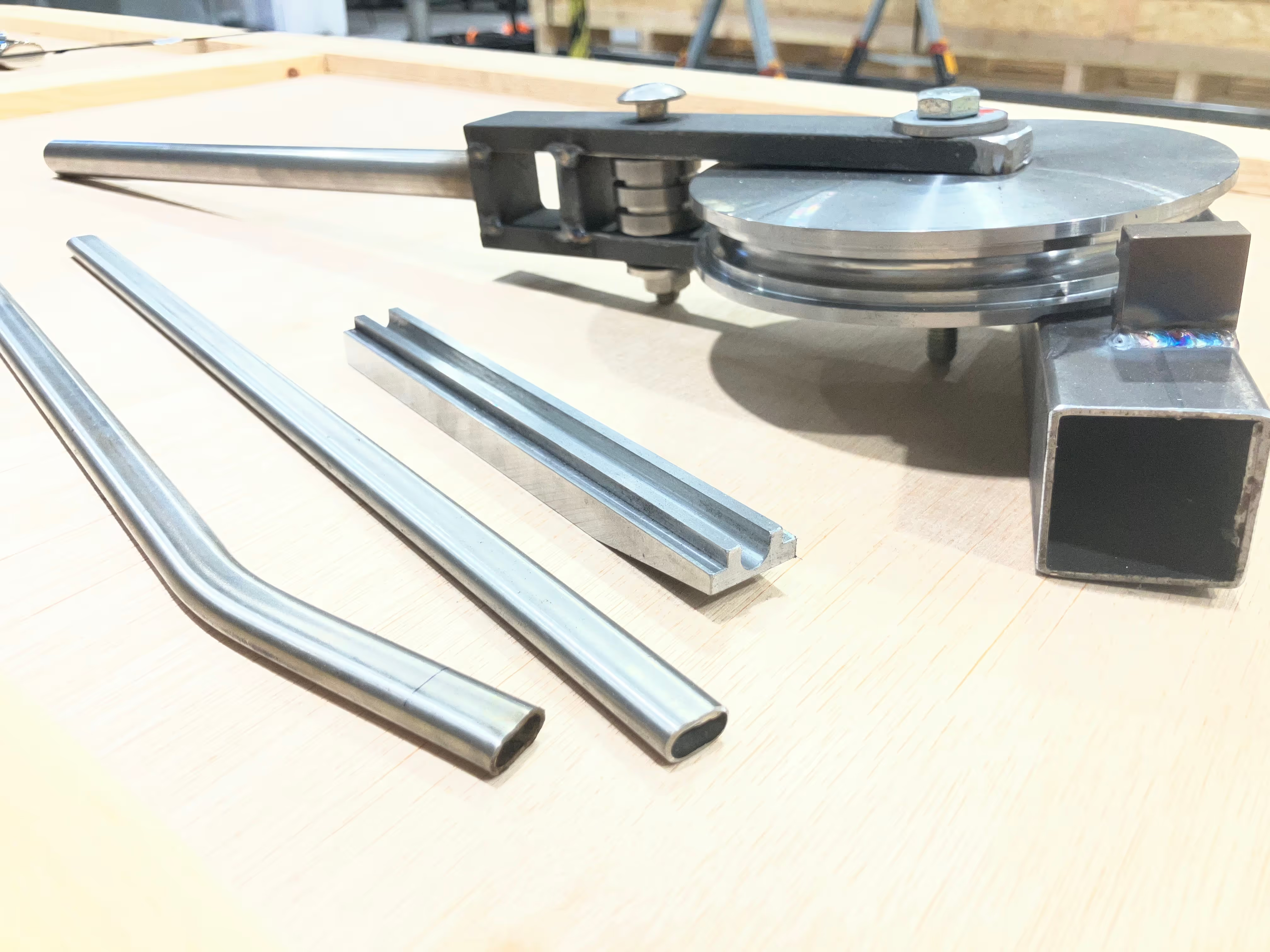
Tube profiles formed or fabricated by modifying tooling used for existing tube profiles at the Timeless Tube workshop.
Tooling for Tube Bending and End Forming
Developing a new tube profile is only one part of creating a finished tubular component. Many applications also require secondary fabrication processes such as tube bending, flaring, expansion, reduction or laser cutting.
Achieving the required bend radius while maintaining profile integrity may require dedicated bending tooling, particularly for non-circular tube sections. End-forming operations may also be required to create critical interface dimensions or compatibility with standard fittings and assemblies.
Timeless Tube offers a range of fabrication services including tube bending, end forming, laser cutting and welding. Visit our tube bending guide to learn more about bending methods, tooling development and achievable bend radii.
Where fitment, bend performance or dimensional requirements are critical, we recommend discussing the application with one of our engineers at an early stage of the project.